Featured

Like A Thief In The Night

One night a thief broke into a house he thought was abandoned. As he walked then the darkened house with a flashlight he heard a voice from the kitchen that said, “Jesus is watching you.’ He stopped and said, “who’s there?” There was no answer so he thought he must have imagined it. But after he took a few more steps, the voice said again, “Jesus is watching you.” He decided to walk toward the voice, just before he entered the kitchen, he heard it again, “Jesus is watching you.” He swung the flashlight up and saw a parrot talking in a cage. The parrot said, Jesus is watching you.” The their turned flipped on the kitchen light and said, “Why you’re just a dumb bird.” The he looked in the corner of the room and seen a huge Rottweiler couching. And the parrot said “Get him Jesus.”

You might think it’s strange that Jesus would compare Himself to a thief. Of course, Jesus isn’t identifying with the sin of stealing. But just a good thief (that’s a oxymoron).that tries to sneak in quickly and quietly and escape with His people. That’s an accurate description of how Jesus will rapture His church.

We should all be living as if Jesus was crucified yesterday; raised from the dead this morning, and is coming back this afternoon.

1 Thessalonians 5: 1-4 tells us, “But concerning the times and the seasons, you have no need that anything be written to you. For you yourselves know that the day of the Lord comes like a thief in the night. For when they are saying, “Peace and safety,” then sudden destruction will come to then, like birth pains on a pregnant woman; and they will in no way escape.

We should know these 4 things

1. Jesus will return, But we don’t know the exact day.

Can you imagine a thief sending you a text or email saying, “Just wanted to know that I’m coming to rob your house tonight.” Of course not. Thief’s don’t announce when they’re coming. They sneak in and out.

When I was growing up my Dad used to do military funerals when a soldier or veteran would pass away. My father would keep all the guns in his closet. One night when no one was home the house was broken into and all the M16 rifles were stolen. He was very upset because they trusted him with these rifles. For a long time there would be someone home, or a neighbor would be watching the house.

Jesus told us to keep watch, because you don’t know on what day the Lord will come. We need to understand, if the owner of the house had known at what time of night the thief was coming, he would have kept watch and not let the house be broken into. So we must be ready, because the Son of Man will come at an hour when you don’t expect him (Matthew 24:42-44),

There have been times throughout history when many people expected Jesus to return. We use the Gregorian calendar now, but when the Julian calendar turned from year 999 to the year 1000, people expected Jesus to come for a new millennium, the same was true in the year 2000. People were on their best behavior, In the year 1000 history says that worldly goods were sold and money was given to the poor. Prisoners were set free, and many traveled to Israel to wait for Jesus’s return,

In the second and third chapter of Revelation, Jesus gives messages to the 7 churches, which represent all churches of all time. When He wrote to the church at Philadelphia, He says, “Since you have kept my command to endure patiently, I also will keep you from the hour of trial that is going to come upon the whole world to test those who live on the earth” (Revelation3:10).

In Luke 17 Jesus compares His return to a couple of Old Testament events. “Just as it was in the days of Noah, so also will it be in the days of the Son of Man. People were eating, drinking, marrying and being given in marriage up to the dat Noah entered the ark. Then the flood cane and destroyed them all. It was the same in the days of Lot. People were eating, drinking, buying and selling, planting and building. But the day Lot left Sodom, fire and suffer rained down from heaven and destroyed them all. It will be just like this on the day the Son Of Man is revealed (Luke 17:26-30).

Are You Ready?
What Is Something I Did Differently From When I Was Raised?

This prompt question was something I didn’t have to think about for 2 seconds. The answer is a immediate -Everything.

Before my daughter was even born I knew I would not raise her the way my parents raised me. I was always there for her, show up to ballet, choir concerts, bowls tournaments. She knew 100% she was loved, and cared for. There was always food and snacks in the house, her homework from school was expected to be done.

My son was no different. I went to baseball games, bowling tournaments, football games. He knew we loved him and cared for him.
I was not about to repeat any part of the way I was raised. The only part that I kept of my raising was the Hungarian holiday traditions I learned from my father and Nagymama (grandmother).

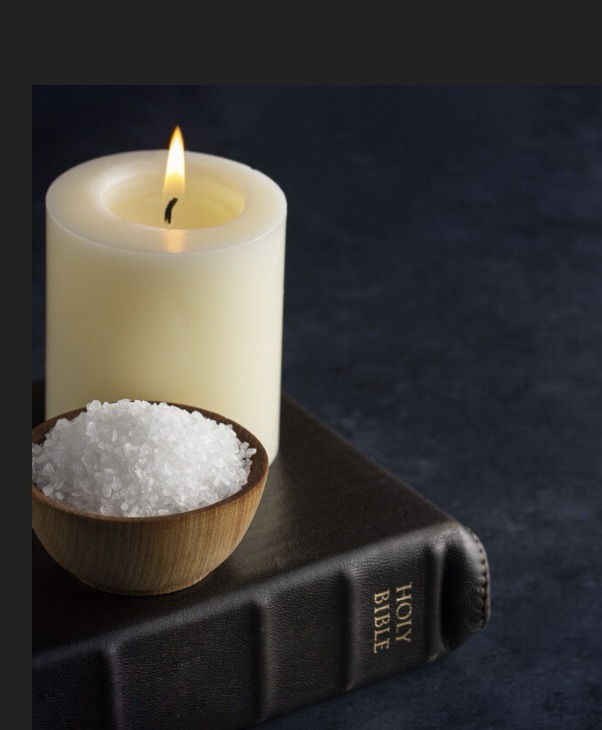
Salt And Light

The world is comfortable with believers that are sweet, quiet and agreeable.

It gets uncomfortable when following Jesus requires us to say something unpopular.

In Matthew 5:13 Jesus says, “You are the salt of the earth, but if salt has lost its taste, how shall its saltiness be restored? It is no longer good for anything except to be thrown out and trampled under people’s feet.”

Don’t lose your saltiness.

Don’t become so concerned with fitting in, keeping everyone comfortable, and earning approval that you lose the distinctiveness Jesus called you to have.

That doesn’t mean believers should be harsh, arrogant, combative unnecessarily offensive.

The Bible tells us to speak with grace.

Colossians 4:6 tells us, “Let your speech always be with grace, seasoned with salt, that you may know how you ought to answer each one.”

Grace and truth.

Love and conviction.

Compassion without compromise.

For us, that means speaking openly about what God has taught us about faith, health, marriage, family, and home, even when those convictions are unpopular.

Not everyone has to live exactly like we do. Not because we have everything figured out. Not because controversy is the goal.

But because there are moments when staying silent to remain agreeable means hiding what God has called us to share.

Sometimes love encourages, comforts, or warns. Sometimes love tells the truth someone doesn’t want to hear.

Jesus did not call us to blend in so well with the world that no one can tell the difference.

He called us salt.

We need to take Hebrews 5:13 as a command to know our assignment.

Speak with grace.

Walk in humility

Love people deeply

But do not lose our saltiness trying to earn everyone’s approval.

What Are My favorite 5 Apps On My Phone

I have a few Apps I have on my phone that I like. They are Stellarium which is an app which identifies the solar system in the night sky. The Seek app in which I use to Identify plants in nature. I also have the SiriusXM app which I can play music with no advertisements. These are the ones I use all the time.

A Mustard Seed Of Faith

“The Kingdom of Heaven is like a grain of mustard seed, which man took, and sowed in his field, which indeed is smaller than all seeds. But when it is grown, it is greater than herbs, and becomes a tree, so that the birds of the air come and lodge in its branches” -Hebrews 13:31-32

Have you ever thought about your faith being a living growing thing? God has a destination for our faith. There is a kind of faith that God hates, and there is a kind of faith that God loves. Each of us have been given a measure of faith, and we must realize what we have done with it.

The book of Matthew tells us a story of a situation, where Jesus’s disciples could not deliver a young boy from a demon spirit. Jesus called them faithless. He only gave them one reason that boy had not been delivered.

It was not because of his parents, sins, or the boys sins, but because it was their unbelief.

When jumping out of an airplane, a skydiver is not sure where he will land. He has to have a measure of faith.

The problem with too many of us today is that we are afraid to try our faith. We try to play it safe and secure. I think we fear trying our faith today because culture prizes absolute certainty and public perfection over personal vulnerability. The world mocks deep spiritual beliefs and people worry about backlash from their friends or co-workers.

Mustard seeds turn into trees of maximum height of 21 feet tall, which means the roots can be up to 63 feet in the ground straight down. Our faith needs to spread out for others over three times ad much as ourselves according to this example.

Our faith should not depend on seeing God move at all, but it sure you can on our trust in Him.

Each of us have faith, but the question is are we using it? Real spiritual maturity means, relying on God’s unchanging character rather than demanding a visible display of His power.

True faith does not want a dramatic sign of a changing circumstance to believe, it rests completely on who God is. God has given each of us a specific measure of faith. Walking out and using that inner trust to take the next right step, even when the path is unclear. Action follows belief. Faith is measured by our obedience and movement, not how strongly we feel an emotional push or sudden shift around us.

Living Under God’s Roof

No matter how strong a foundation or how well build the walls, a house without a roof is unfinished and unprotected. Without a covering the rain seeps in. The sun beats down, and every part of the home is exposed to the elements. The roof doesn’t just complete the structure it makes it livable.

In our spiritual lives, the roof represents God’s covering presence and lordship. It’s the reality that our lives are not held together by our rhythms, plans, or discipline alone. Psalm 91 paints a beautiful picture, “Whoever dwells in the shelter of the Most High will rest in shadow of the Almighty. He is my refuge and my fortress, my God in who I trust.”

A rule of life is not about building a self-sufficient spiritual house, it’s about arranging our lives to stay under God’s roof. His presence is what shields us, and keeps us safe from harm. When we live with a conscious awareness of His covering, our practices are no longer just self improvement, it becomes a way of abiding in His shelter.

The truth is even the best built spiritual house will face seasons of difficulty, loss, and testing. But, when our lives are under God’s covering, the storms may shake us, but they won’t break us. Living under God’s roof means we can rest even when we don’t have all the answers, trusting that the One who shelters us also sees the storms ahead and is more than able to carry us through.

True Creator or Counterfeit Devil

Some people cannot discern be the real and the counterfeit. Unfortunately some believers are in a precarious place these days, being led astray with many different winds and teachings. They take for granted what people speak as truth whether a preacher or a believer. God tells us to in 1 John 4:1 to “test the spirits.”

“Beloved, do not believe every spirit, but test the spirits to see whether they are from God, for many false prophets have gone out into the world. By this you know the Spirit of God.”

The internet is a great place to learn about God. But it’s important to check the information it shares against what God says. Every source of information has its place, but we’re responsible for fact-checking everything we find.

Many false ‘teachers’ do not want to be questioned (at least without getting angry). If someone doesn’t commend you for asking there is an issue with that, and them.

We have so much false information these days, and so many people are deceived by it, that it can become discouraging. Everyone should be careful to check whether they are teaching out of context. James 3:1 has a stern warning for any who teach. When you are listening to someone, write down the scriptures they share and read the context of what they are saying. A tip is to read a few scriptures ahead and a few scriptures after. And ask contextual questions like “Who is speaking in this verse or what was the subject. A simple example is Philippians 4:13, “I can do all things through Him who strengthens me.” Is a popular scripture that is often taken out of context. People often use this verse to mean that God will help them succeed at any personal goal, like passing a test, or getting a job. It sounds like a blank check for personal achievement or a positive thinking slogan. The real context is when Paul wrote to the Philippians he was in a Roman prison. Paul explains that he has learned how to be content whether he is well fed or hungry and whether he has plenty or is in need.

“Doing all things…” actually means enduring hardships, suffering, and poverty with the strength and contentment provided by Jesus, rather than getting whatever earthly success you want.

Be aware whether to notice if they are grabbing a verse from here and there, often out of context to piece together proof of their thinking.

Be cautious. 1 Timothy 4 reminds us that in the last days how people will depart from their faith. Pray about it, and be wise. If something doesn’t sound right, it may not be. Many talk about Jesus but don’t know the context of what they are saying.

So many times people have taken things out of context to blur the lines between truth and false information.

We are so blessed to have God’s word to search and see what the truth is. And when we know His Word well, we can discern between good and evil.

The Kindest People

One thing I know about extremely kind people is that most have suffered the most. They have deep empathy because their pain has created it.
People who face hardship learn how much loneliness and hurt weigh on the soul. Instead of turning bitter after cruelty, they decide to become a safe place for others.
Most people think kindness is just something they do, but they spot silent struggles in others quickly and offer comfort.

Some people brush off kindness like it’s nothing. I notice every act of kindness as an act of rare empathy brought on by pain.

Faithful In All Circumstances

While most of us remember Daniel from the Bible as the one in the lions’ den, there was a lot more to his life.

Throughout the first six chapters of Daniel, we learn about how to remain faithful in all circumstances. He ran into several trying situations that could have caused him to lose faith or bend from his beliefs, but Daniel stayed strong.

Through it all Daniel displayed his holiness. There are risks, reasons, and rewards for remaining undefiled by the world.

People who represent holiness are powerful tools in the hands of God. As they stand strong in the face of trials, they witness to the reality of the Lord and Savior. They inspire and challenge us to also stand strong for God’s truth and righteousness.

Daniel lived out genuine holiness. At great risk of losing his life, still he chose to remain undefiled by pagan Babylon.

I often think about what I would do when the bottom falls out of my family’s security, my finances, or my health. Or when things just go horribly wrong. I don’t like to think about it, yet still I know there will be a time when it will. I know I am not insulated from crisis. We live in a fallen world and, any of us can face crippling disappointment and disaster.

What was Daniel’s response to the collapse of his own circumstances? Through him, we get an example of what faithfulness to God looks like when Daniel bottom falls out.

Genuine faith remains strong in the middle of fire circumstances and uncertain outcomes.

Shadrach, Meshach and Abednego (Daniels friends) did not operate on the popular notion that faith is about having confidence in expected or desired outcomes. By their words and actions, they proclaimed a truly Biblical faith -confidence in a sovereign God regardless of any outcome.

In Daniel 4, King Nebuchadnezzar needed a reminder of the limits of his greatness and glory. God gave him that reminder through a dream that terrified the king and he again called for Daniel to interpret the vision. The meaning was as simple as it was scary. Daniel told King Nebuchadnezzar that he was going to fall greatly. And that he did when Nebuchadnezzar ultimately regained His mind and rule, he plainly stated what “the people’s, nations and men of every language who lived in all the world” needed to learn as a result of his fall.

Daniel made a declaration of righteous judgment.

In Daniel 5, Daniel flips chapter 4. Daniel used King Nebuchadnezzar’s conversion to affirm that the repentant reap the rewards of grace, however bleak their pasts. In chapter 5, Daniel uses King Nebuchadnezzar sacrilege to declare that the rebellious reap the consequences of wrath, however, secure their present. Two equally evil Kings demonstrated two equally vital messages. God’s complete pardon for the humble and God’s sure judgment for the proud.

Daniel had call to trust and live

Daniel was more than 90 years old when the events that led him into the lions’ den occurred. One might think Daniel received a little rest for his retirement years, but God was still using the faithful prophet. Age apparently has no barrier to spiritual usefulness. In Daniel’s case, gospel truths that have been building through the book of Daniel describing his life in Babylon had reached their climax.

No matter how God has made us, or whatever we see as our limitations, He can use our abilities to bring honor to His name.

Cultivating A Heart of Expectation: Preparing For The Return Of Jesus

Given the current state of the affairs in the world, it’s hard to avoid the conclusion that Jesus may be returning soon. I’m trying to hold onto my confidence in God and live by faith.

Bible clearly instructs us to be vigilant. But he also teaches that no one can say for certain we are living in the “end times.” Jesus Himself repeatedly said that no one knows the hour of His return. In Matthew 24:36 Jesus says, “No one nows of that day and hour, not even the angels of heaven, but My Father only.” In Matthew 24, the disciples asked Jesus about the end of the age, and He warns of false prophets, wars, famines, and earthquakes as the beginning of sorrows.

Today we are seeing all those signs. That being said has there a period in the history of the world when this was not the case.

Can you imagine what it was like to be a believer in Rome under Nero or Darius the Mede when people were put in a fiery furnace or a lion’s den for your faith in God? What do you suppose believers were thinking when the legions captured Jerusalem and destroyed the temple in AD 70. my anyone recorded that the end was near when the black death decimated and wiped out entire towns and claimed more than 25 million lives? And the so-called Great War that destroyed an entire generation. Or when the shadow of Hitler and the Third Reich was rising over Germany and Eastern Europe. Clearly, the early 21st century has no monopoly on death, disaster, devastation, and terror. We don’t need to know a great deal of history to realize this.

But let’s assume for a moment that these are the end times. What then? How should I believe or respond? Fortunately, the apostle Peter gives us a straightforward. Answer to this question in 2 Peter 3:10. He wrote specifically in reference to the end of the age. “But the day of the Lord will come as a thief in the night, in which the heavens will pass away with a great noise, and the elements will be dissolved with fervent heat, and the earth and the works that are in it will be burned up.”

Peter does not suggest that we should head for the hills, or adopt a fortress mentality, or start stockpiling food and weapons. He says all of these things will be dissolved, and we need to conduct ourselves in holy conduct and godliness, looking for and hastening the coming of the day when Jesus will return. As Peter sees it, in time believers are called to do one thing, they are to practice, holiness, and do good to others whenever, and whenever they can. They are supposed to do the works of God.

Paul seems to have been thinking the same way when he wrote to the Galatians. Galatians 6:10 tells us, “Therefore as we have opportunity, let us to good to all, especially to those who are of the household of faith.”

Many people have bought land in the mountains, stocked up on weapons and food to avoid being times. But we are not called to run. We are called to live a spiritual alertness, love, actively, and steadfast, faithfulness, as we wait for Jesus‘s return. Rather than panicking or setting dates.